Throughout history, the journey of a woman has been symbolised by three distinct stages: The Maiden, The Mother, and The Crone. These archetypes represent the phases of life a woman experiences, each with its unique qualities, challenges, and wisdom. They are more than just stages of physical aging; they embody the spiritual and emotional evolution that a woman undergoes as she moves through life.
The Maiden: The Spirit of Youth and Potential
The Maiden is the first stage of a woman’s life, often associated with youth, vitality, and potential. She embodies the qualities of curiosity, innocence, and the freedom to explore life’s possibilities. This phase is marked by growth and learning, as the Maiden seeks to understand her place in the world. She is often seen as the symbol of new beginnings, unburdened by the responsibilities and challenges that come with the later stages of life.
In mythology and folklore, the Maiden is often depicted as a young woman on the cusp of adulthood, full of dreams and aspirations. She represents the springtime of life, where everything seems possible, and the future is filled with hope.
The Mother: The Nurturer and Creator
As a woman matures, she transitions into the Mother stage. This phase is characterised by nurturing, creation, and the giving of life. Whether a woman becomes a mother in the literal sense or through her contributions to society, this stage is about embracing responsibility, caring for others, and cultivating a deeper sense of love and compassion.
The Mother is the embodiment of abundance and fertility, both physically and emotionally. She is the provider, the caregiver, and the sustainer of life. In this stage, a woman’s focus often shifts from herself to others, as she takes on the role of protector and nurturer.
In art and culture, the Mother is often depicted as a figure of strength and stability, holding her family and community together. She represents the summer of life, a time of growth, productivity, and fulfilment.
The Crone: The Wise Woman and Sage
The final stage of a woman’s life is the Crone, a time when she embodies wisdom, experience, and introspection. The Crone is often misunderstood in modern culture, where aging is frequently viewed as something to be feared or avoided. However, in many traditions, the Crone is revered as the keeper of knowledge and the wise elder who guides others with her insight.
The Crone is a symbol of the autumn and winter of life, where the focus shifts from external achievements to internal reflection. This stage is about embracing the lessons learned throughout life and sharing that wisdom with others. The Crone teaches us to value the journey, to find beauty in simplicity, and to accept the natural cycles of life and death.
“You will experience the triple Goddess—Maiden, Mother, and Crone. These phases are symbolic to, not just your own life, but life as a whole. Birth, life, and death. As women, it is important to understand you are the cycle.”
Emma Mildon, Evolution of Goddess: A Modern Girl’s Guide to Activating Your Feminine Superpowers
I am fully embracing the transition to the Crone stage of my life, and I wear that title with pride. Society often pressures women to remain in the Maiden stage; youthful, vibrant, and full of vitality. Yet, when we step into the Crone phase, it is sometimes seen as giving up rather than evolving and growing.
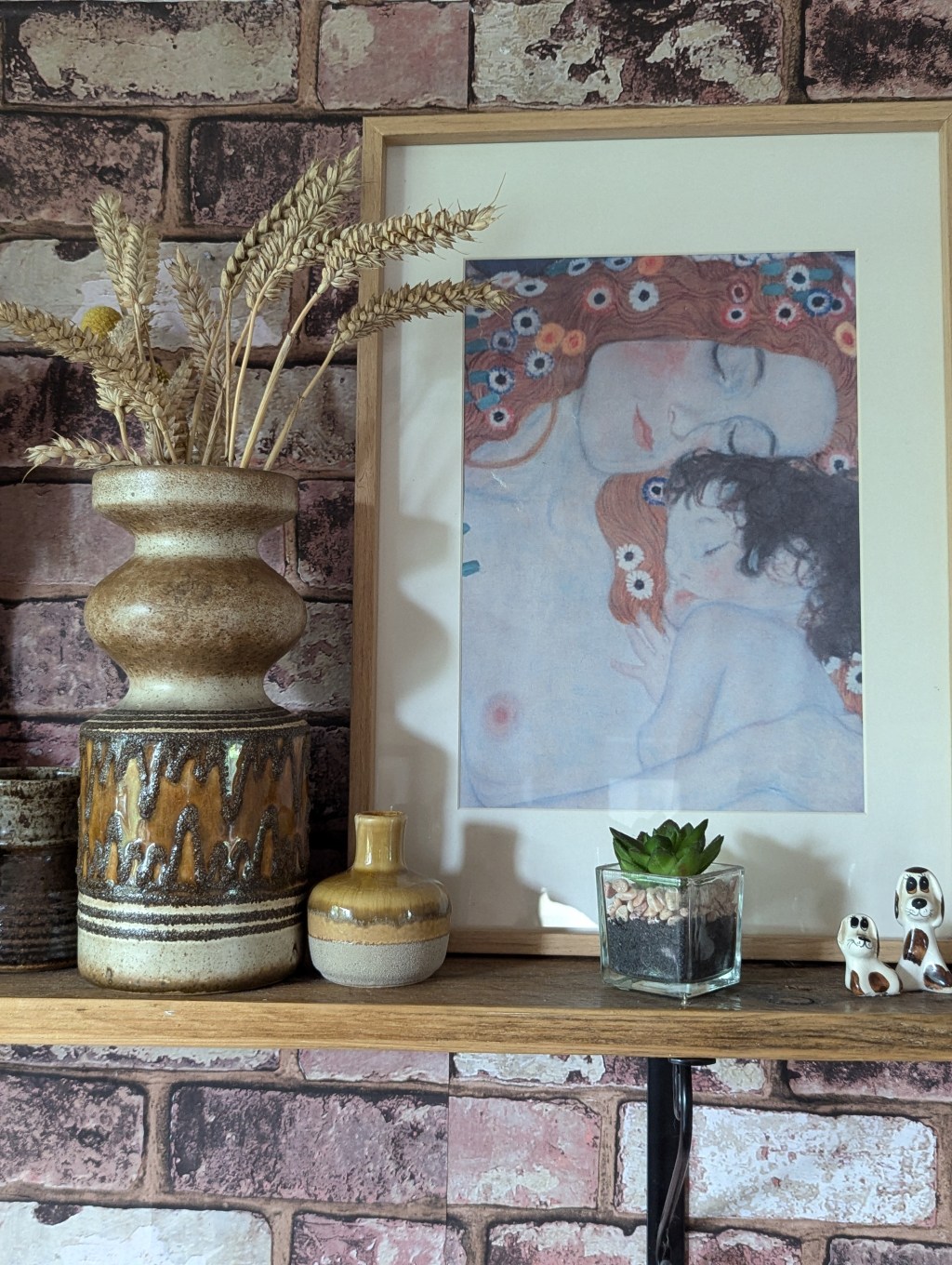
As a teenager, just beginning my journey into adulthood, I purchased a Klimt print. At that time, I deeply longed to become a mother. I would gaze at the image, imagining the day when I could cradle my own child in that same tender way. Though the Crone was not included in the print, I was aware of its presence, as my love for art had already introduced me to the full work.
This image has remained with me through the years as I raised my children, becoming a cherished possession that has accompanied me through all stages of life.

Gustav Klimt’s “The Three Ages of Woman”
The profound symbolism of these three stages is beautifully captured in Gustav Klimt’s painting, The “Three Ages of Woman” Created in 1905, this masterpiece visually narrates the journey from youth to old age. Klimt’s work is a poignant exploration of the life cycle, highlighting the inevitable passage of time and the beauty that exists in each stage of life.
In the painting, Klimt depicts three figures: a young girl (the Maiden), a mother holding her child (the Mother), and an elderly woman (the Crone). The contrast between the figures is striking, not only in their physical appearances but in the emotions they evoke. The Maiden is serene and pure, the Mother is tender and protective, and the Crone, with her bowed head, carries the weight of life’s experiences.
Klimt’s use of colour and form brings out the emotional depth of each stage. The warm, golden hues surrounding the Maiden and the Mother evoke a sense of warmth and vitality, while the darker, cooler tones enveloping the Crone suggest a quiet, contemplative end to life’s journey. Yet, despite the sombre tones, there is a sense of peace and acceptance in the Crone’s figure, reminding us that each stage of life holds its own unique beauty.
Conclusion
The Maiden, the Mother, and the Crone are timeless archetypes that continue to resonate with women today. They remind us that life is a journey of continuous growth and transformation, with each stage bringing its own challenges and rewards. Gustav Klimt’s “The Three Ages of Woman” serves as a powerful artistic representation of this journey, capturing the essence of what it means to be a woman at every stage of life.
In embracing these archetypes, we acknowledge the full spectrum of womanhood; from the innocence of youth to the nurturing power of motherhood and the wisdom of old age. Each stage is a vital part of the whole, contributing to the rich tapestry of life that every woman weaves.
Hope your day is magical and you notice the small precious moments.
Love & healing hugs

 Wool Goddess
Leave a comment