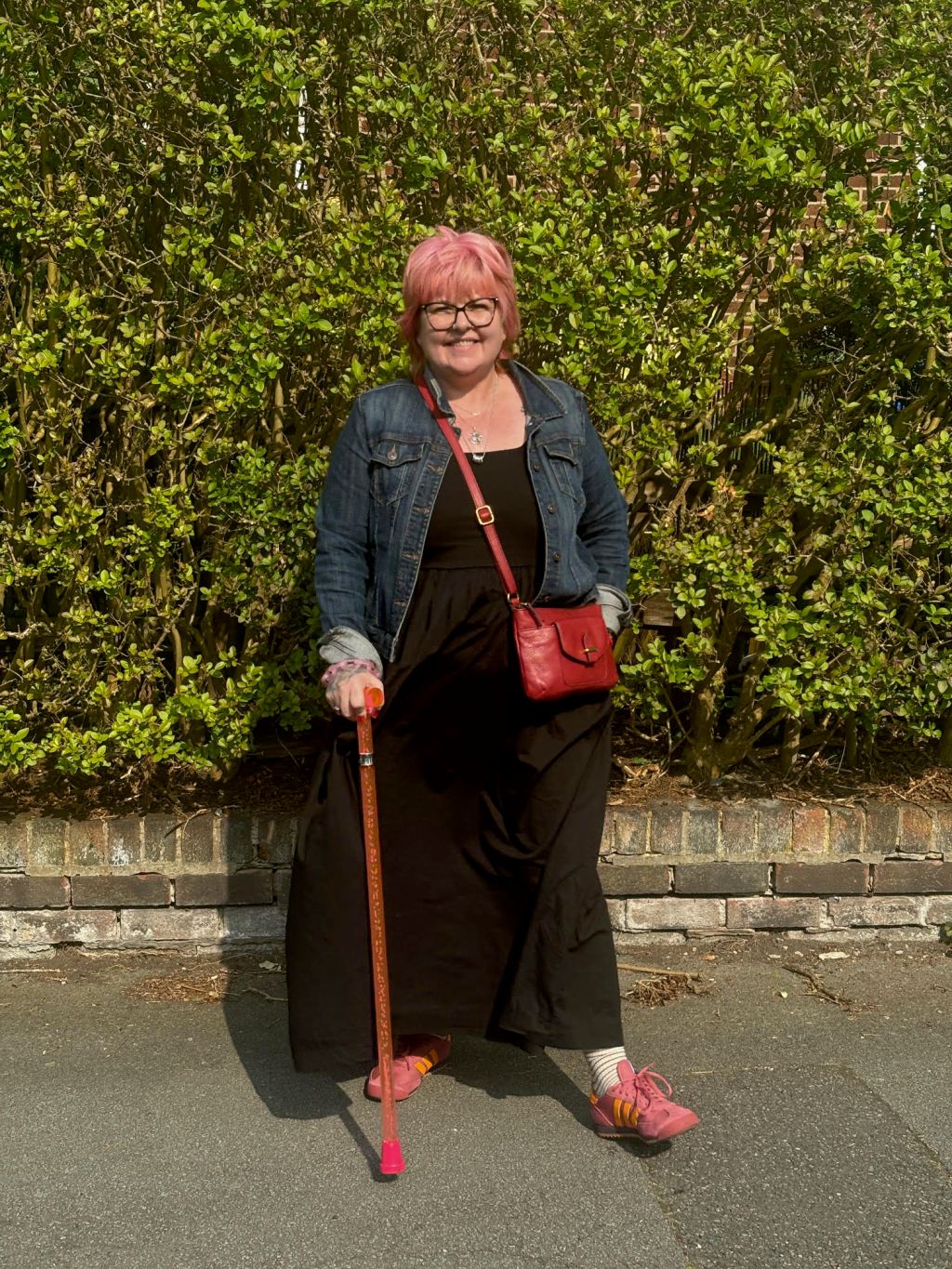
One of the things I get asked about often, sometimes directly, sometimes in quiet glances, is why I use a walking stick.
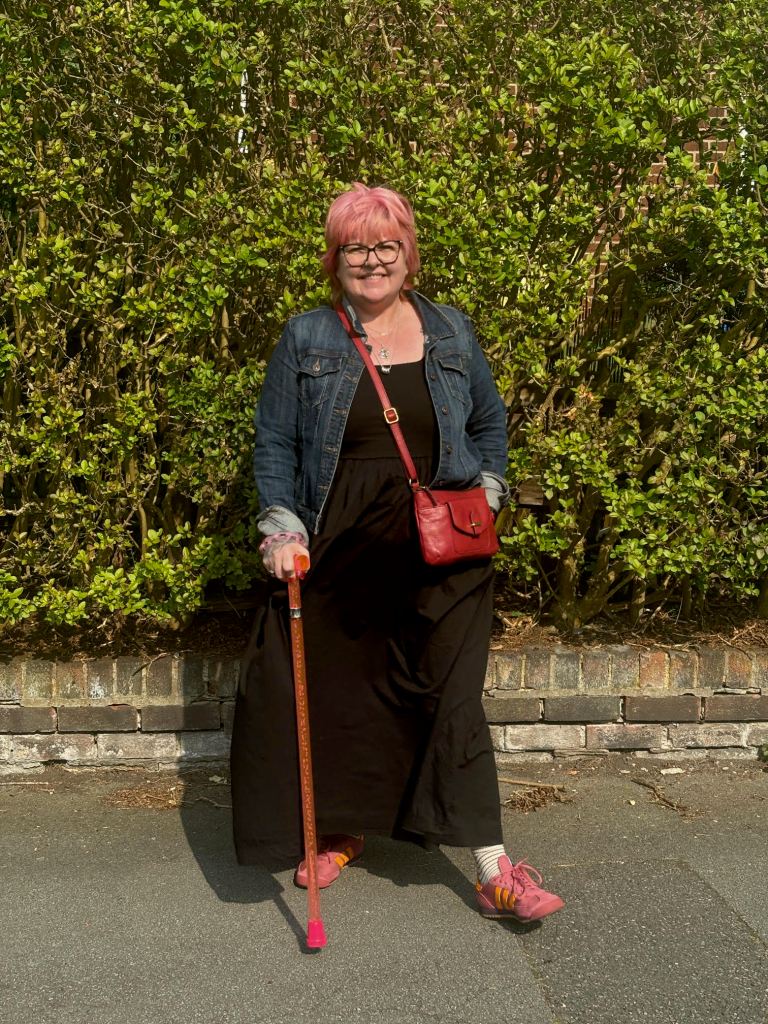
I understand the curiosity. I don’t always look like someone who needs one. Some days you’ll see me out, upright, smiling, getting on with things. On other days, I’ll have my stick firmly in hand, moving more slowly and more cautiously. And that contrast seems to confuse people. By definition, I am an ambulatory mobility aid user. This is someone who uses a mobility aid some days, but not every day. I can stand and walk, but how much I’m able to do can change from one day to the next, and sometimes even from one moment to the next.
So I want to explain it. Not to justify myself, but to bring understanding.
Pain, mobility, and unpredictability
Living in my body means living with pain that doesn’t follow a neat pattern. I have multiple conditions that affect my joints, muscles, nerves, and energy levels. Hypermobility means my joints move beyond where they should, sometimes locking or overextending without warning. Fibromyalgia and ME bring widespread pain, deep fatigue, and post‑exertional malaise, where doing too much one day can leave me paying for it for days after.
Add in sacroiliac joint dysfunction, Achilles tendinopathy, and IT band syndrome, and walking itself can be painful, unstable, and exhausting. My lower back, hips, legs, and feet don’t always cooperate. Balance can be unpredictable. Strength can disappear mid‑stride.
Then there’s the pelvic and bowel surgery, the nerve disruption, scar tissue, and the posterior vaginal prolapse, all of which affect core stability and confidence in my body. When your centre of support feels compromised, everything else has to compensate.
The stick isn’t a weakness; it’s a tool
I don’t use a walking stick because I’ve “given up.” I use it because I’ve learned to listen.
For a long time, I didn’t. I pushed through pain, ignored warning signs, relied on strong painkillers, had many falls and told myself I was fine. That mindset cost me. These days, the stick is part of choosing longevity over stubbornness.
It gives me stability when my joints are unreliable. It reduces pain by offloading pressure. It helps with balance on days when my body feels wobbly. And most importantly, it allows me to keep moving safely.
Using a walking stick means I can go out when otherwise I might not. It means fewer falls, fewer flare‑ups, and less fear of my body giving way in public. It’s not a sign of decline; it’s a form of self‑care.
The invisible part of disability
Many of my illnesses aren’t visible. People don’t see the planning that goes into leaving the house, the energy calculations, the recovery time afterwards. They see me doing something one day and assume I can do it every day.
But chronic illness doesn’t work like that.
Just because I managed yesterday doesn’t mean I can today. Just because I’m upright doesn’t mean I’m pain‑free. Just because I smile doesn’t mean my body is cooperating.
The walking stick makes some of the invisible visible, and that can feel uncomfortable, both for me and for others. But visibility doesn’t equal exaggeration. It equals honesty.
Choosing kindness, for myself and others
I share this not for sympathy, but for understanding. Maybe my words resonate because you share a diagnosis. Maybe your condition is different, but affects your quality of life in similar ways. Either way, you’re not alone.
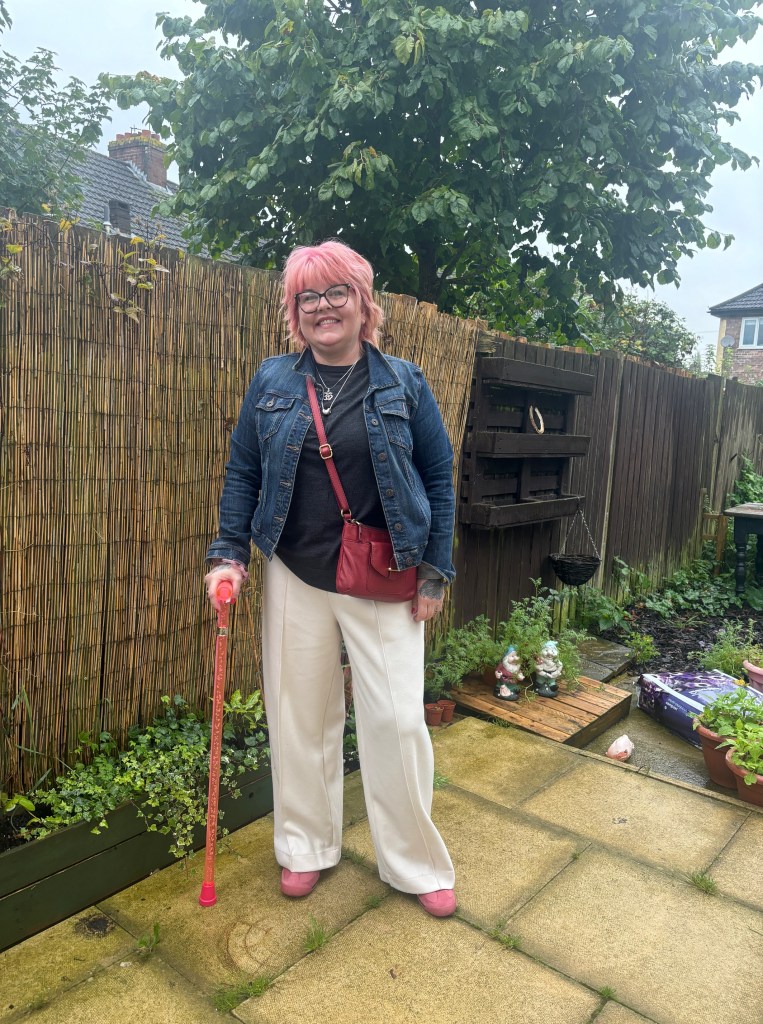
We are all carrying things others can’t see. That’s why I believe kindness should always be the default towards others and towards ourselves.
So if you see me with my walking stick, it’s not a symbol of limitation. It’s a symbol of adaptation, acceptance, and learning how to live well within the body I have.
And honestly? That takes strength.
Love & hugs
 Wool Goddess
Leave a comment