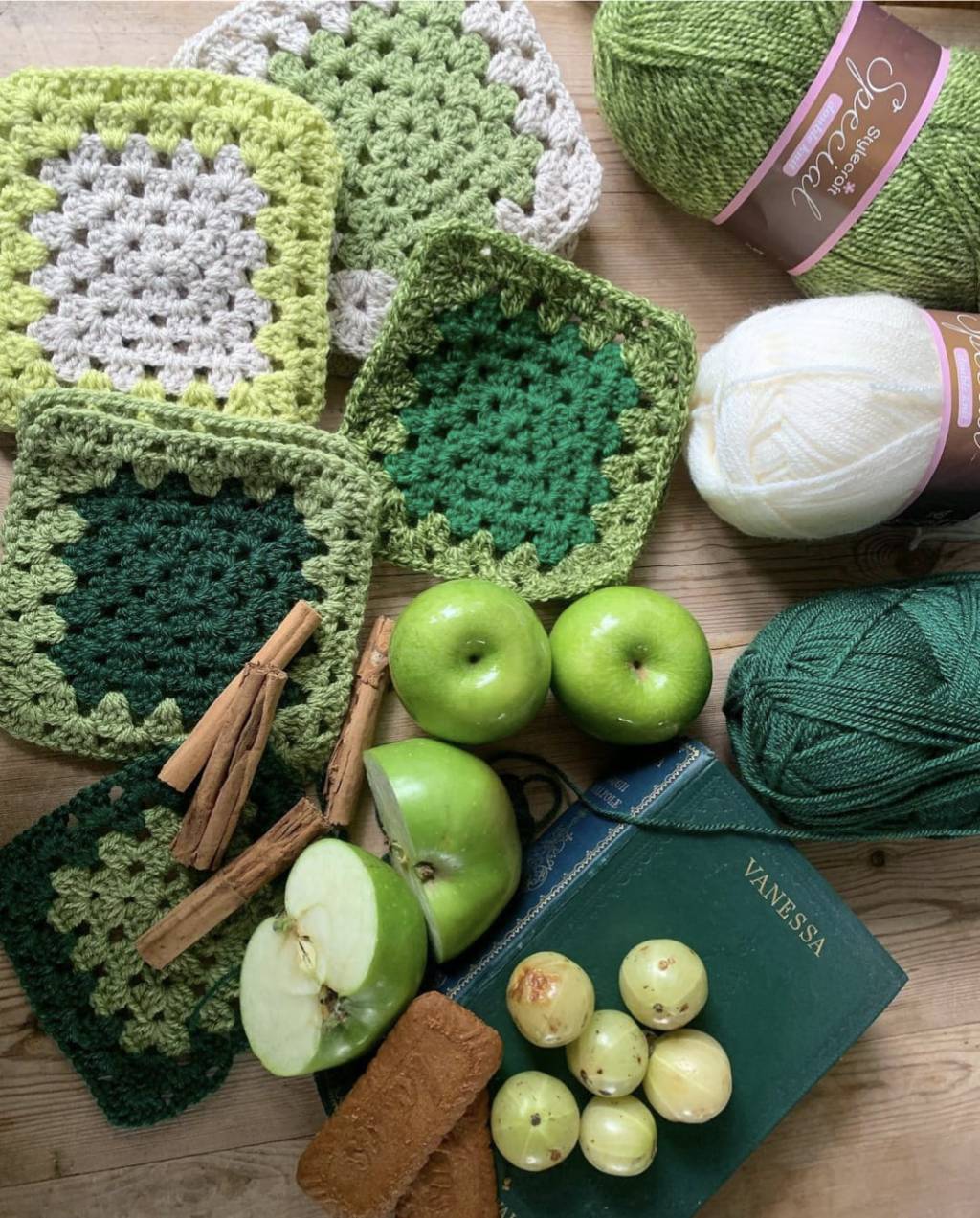
So many people value speed, productivity, and constant output, wearing them like badges of honour. This is why slow craft can feel quietly rebellious. For me, it’s a gentle rebellion to the people advocating burnout and stress.
Crochet, knitting, hand stitching, scrapbooking; these practices ask us to soften, to pause, to move at the pace of our own breath rather than the demands of the outside world. And in that slowness, something deeply healing begins to unfold.
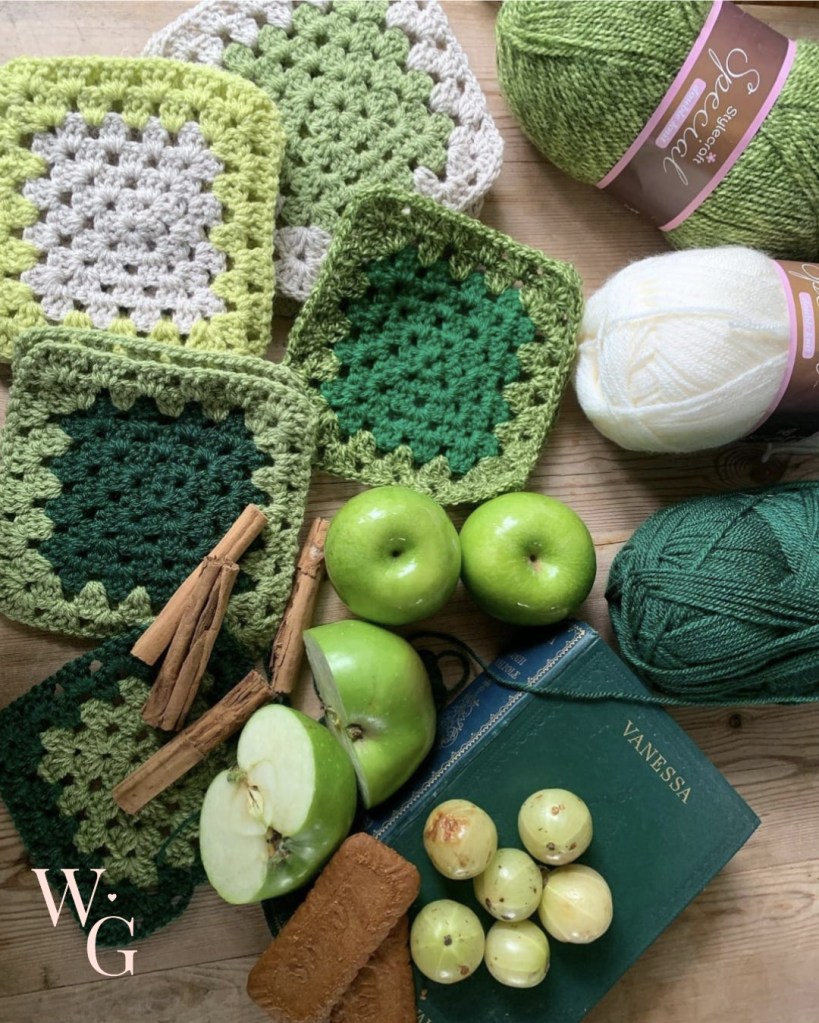
Slow craft isn’t about perfection or finishing quickly. It isn’t about monetising every hobby or turning rest into something productive. It’s about presence. It’s about returning to the body, the hands, and the moment you are actually in.
I once crocheted for a makers’ shop in Liverpool. While I absolutely loved it and was so proud to be a stockist, it slowly took the joy out of slow crochet for me. Lesson learned….never again, even if it was for charity.
Slowness as a Nervous System reset
When you engage in slow craft, your body receives a powerful signal: you are safe. This is something I needed so much. The repetitive movements, the rhythm of hook through loop or needle through stitch, gently guide my nervous system out of fight-or-flight and into rest-and-digest.
For many of us, especially those living with chronic pain, fatigue, trauma, or long-term stress, our nervous systems have been stuck in high alert for years. Slow craft offers a non-verbal way to regulate. No explaining. No fixing. Just steady, predictable motion that soothes from the inside out.
This is why crafting can feel meditative even when your mind is busy. The hands lead, the body follows, and the mind eventually softens.
Healing without needing to be “Good” at it
One of the most healing aspects of slow craft is that it doesn’t require skill to be valid. You don’t need to produce something beautiful. You don’t need to follow patterns perfectly. You don’t even need to finish.
Healing happens in the doing, not the outcome.
When society often ties worth to achievement, slow craft offers a rare experience of being enough exactly as you are. A dropped stitch becomes a lesson in self-compassion. A wonky edge becomes proof that imperfection is not only allowed, but expected.
This gentle undoing of perfectionism is healing in itself.
The body remembers slower ways of being
Our ancestors crafted out of necessity, yes, but also out of rhythm with the seasons. Winter was for mending, making, and resting. Hands stayed busy while the body stayed still.
When we slow craft today, we tap into that ancient memory. The body recognises it. There is comfort in wool, cotton, and natural fibres. There is grounding in making something from nothing with your own hands.
For those living with chronic illness, slow craft can be a way of staying connected to creativity without pushing beyond capacity. You can crochet from the sofa. You can rest between rows. You can stop when your body says stop—without guilt.
Craft as a container for emotions
Slow craft holds space in a way words often cannot.
Grief can move through your hands. Anxiety can be stitched into something tangible. Joy can live quietly in colour choices and textures.
There is no need to explain how you feel when your hands are already doing the talking. This is especially powerful for those who are emotionally exhausted, burned out, or overwhelmed by constant self-reflection.
Sometimes healing isn’t about digging deeper. Sometimes it’s about making a square. Then another. And another.
Reclaiming rest as sacred
Slow craft reminds us that rest doesn’t have to be empty to be valuable. It reframes rest as something nourishing, intentional, and alive.
You are resting while creating.
You are resting while regulating.
You are resting while healing.
This is especially important for anyone who struggles with “doing nothing,” or who has been conditioned to believe rest must be earned. Slow craft allows rest to feel safe, justified, and purposeful—without actually needing a purpose.
A gentle act of resistance
Choosing slow craft in a fast world is an act of quiet resistance. It says:
- I will not rush my healing.
- I will not measure my worth by output.
- I will honour my body’s pace.
In that choice, there is power.
Healing does not always look dramatic or transformational. Sometimes it looks like a half-finished project on your lap, a cup of tea gone cold, and hands moving gently because that is all you have energy for today.
And that is enough.
Slow craft as a way home
At its heart, slow craft is a return to the body, to rhythm, to self. It offers healing not by fixing what is broken, but by reminding you that you were never broken in the first place.
Just tired. Just overwhelmed. Just in need of softness.
And sometimes, healing begins with a single stitch.
Love & healing hugs
 Wool Goddess
Leave a comment