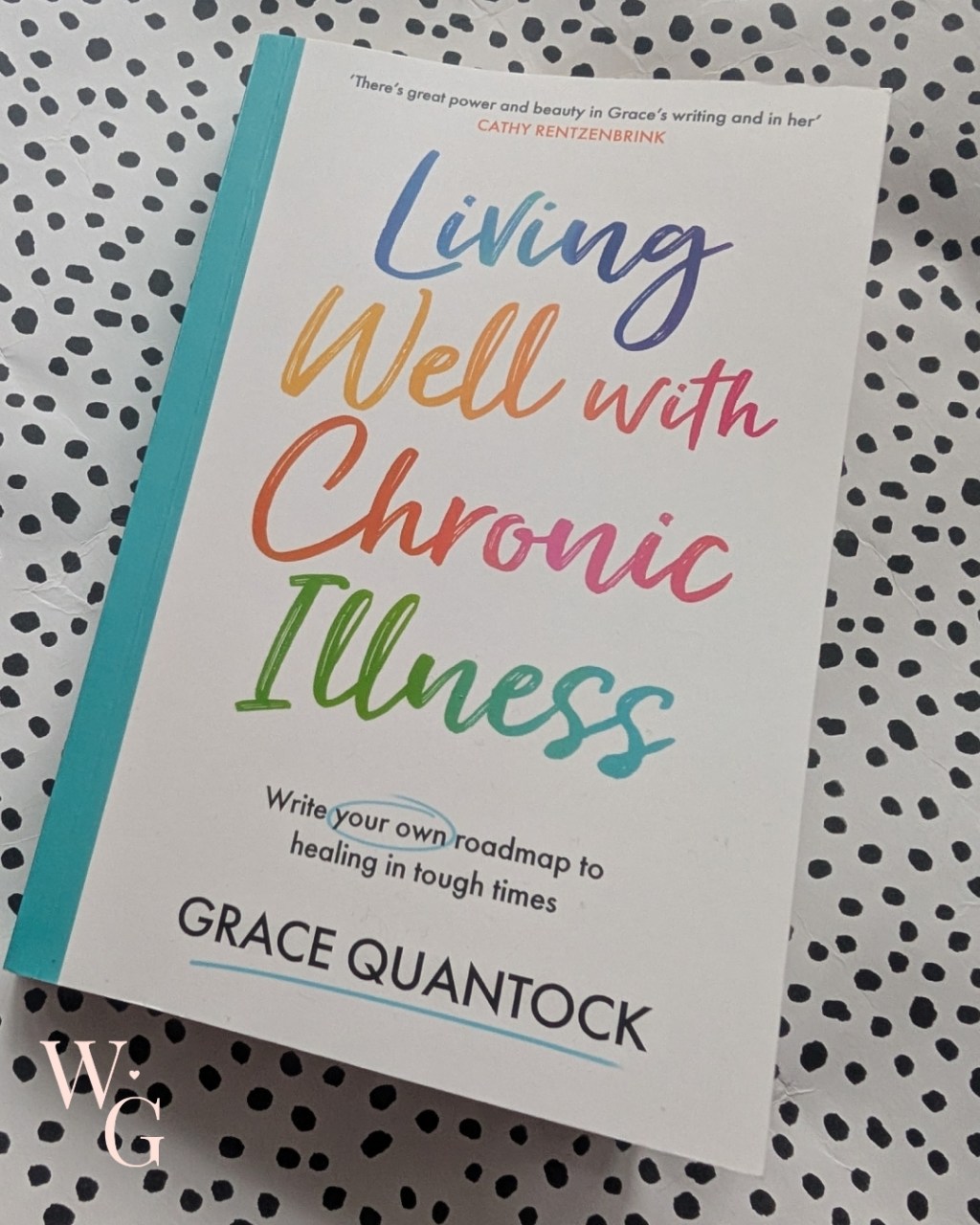
As someone who has lived with chronic illness for a large percentage of my adult life, with the “buckaroo moment” of being diagnosed with fibromyalgia in 2013, I approached Living Well With Chronic Illness with both cautious hope and hard-earned scepticism. What I found in Grace Quantock’s book isn’t a miracle cure, and it doesn’t pretend to be one, but it is one of the most compassionate, practical and deeply resonant guides for living a meaningful life in the midst of ongoing health challenges I’ve come across.
And trust me, I have read many books of this nature!
PR/Gifted Product Disclosure:This item was kindly gifted to me for review purposes. I haven’t been paid to feature it, and all thoughts, opinions, and experiences shared are completely my own. I only recommend products I genuinely use and believe may be helpful for you
Grace Quantock, a writer, psychotherapeutic counsellor and long-time chronic illness advocate, brings together her own lived experience of decades with chronic illness and thousands of hours supporting others in similar shoes. Rather than dispensing quick fixes or platitudes, this book invites readers to “write your own roadmap” to define what living well actually means for you, within the constraints and realities of your body and life.
This felt genuinely refreshing. Too many books in this space have either read like a medical degree journal, or it’s painfully obvious the author doesn’t truly understand the complexities of trying to live your best life with chronic illness. Admittedly, some chapters in other books have offered me moments of insight, but more often than not, I found myself tapping out, overwhelmed by either wallowing or toxic positivity.
From the introduction, I knew this book resonated with me, and once I started, I didn’t put it down until I finished it.
One of the core strengths of this book is its honest acknowledgement of the emotional and practical minefields of chronic illness. Grace doesn’t shy away from the painful parts, the parts which were the most painful for me; the grief, the frustration, the isolation, and the exhausted attempts at finding answers, but she also offers tools to reclaim agency: methods for self-advocacy in medical settings, ways to understand and conserve energy, and space to map out your priorities and values rather than simply reacting to symptoms and setbacks.
The structure of the book encourages active engagement, with journaling prompts, reflections, and exercises that help translate insight into lived action. I would have loved this in the early days, as I honestly struggled for so long. For someone like me, whose journey with fibromyalgia has been about more than managing pain, it’s been about reconstructing identity, expectations, and daily life; these hands-on elements feel like a companion rather than a sermon.
Grace’s search for a diagnosis involving female reproductive issues was, sadly, so very similar to my own.
“The doctor told me I was imagining it… You must have a low pain threshold.”
When Grace wrote this, I nodded as I read it, because I, too, was told similar things.
Another remarkable aspect of Grace’s approach is her intersectional lens. She writes not just about symptom management, but about navigating systems, healthcare, social structures, and relationships that are often ill-equipped to support chronically ill people. Her voice challenges the self-blame and “wellness culture” pressure many of us have internalised, reminding readers that living well doesn’t mean being well in the conventional sense; it means living a life that’s rich in meaning and aligned with personal values, even when pain and fatigue are part of the picture.
Chapter Three was powerful, and I felt completely seen by her words.
“The emotional turmoil that accompanies living with illness can be more distressing than the symptoms or the prognosis. It is scary when we don’t feel like ourselves anymore. We’re leaking tears everywhere and dissolving when we need to be asking clear questions. Or maybe we are feeling more and more frozen, hidden, pushing aside the feelings, we can focus on them later, survival first, ok? But the feelings keep pushing forward (they do that), and now we are waking up with nightmares, snapping at people at work and starting to fear our own brain.”
Living Well With Chronic Illness by Grace Quantock
Even though I wish I’d had this book when I was younger, or especially when I was first diagnosed with fibromyalgia, I have still gained so much from reading it now.
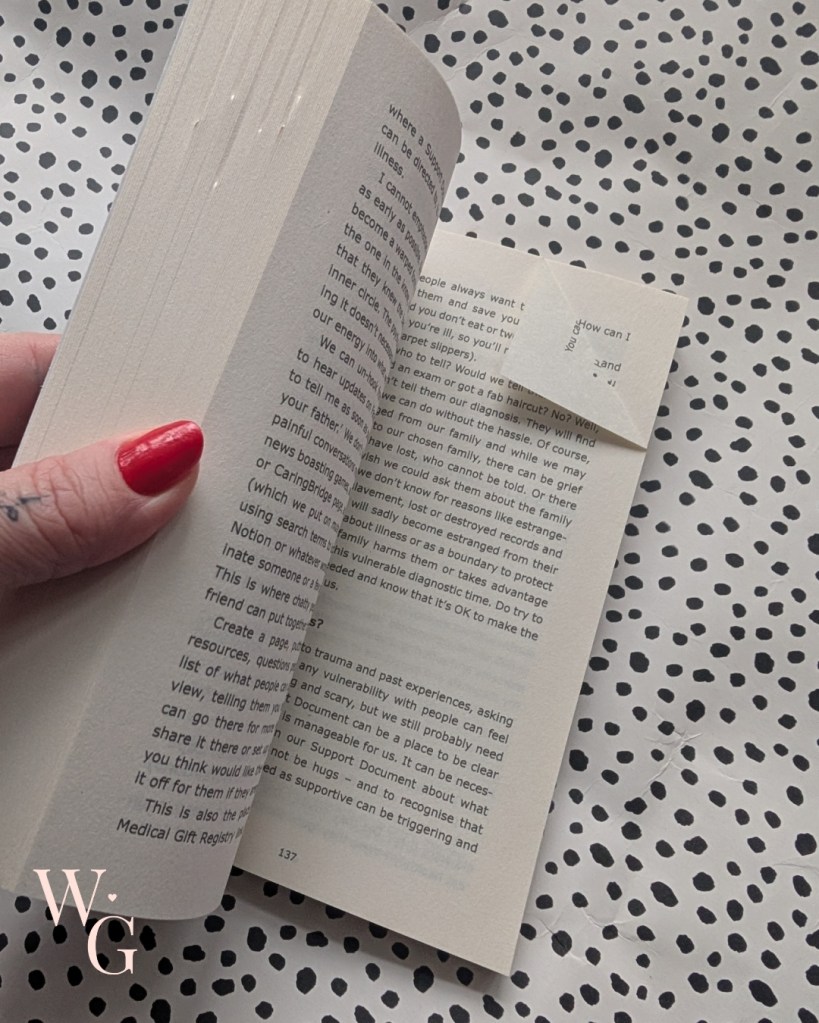
I struggle with vulnerability and asking for help, something that, at different stages, you simply have to do when living with chronic illness. Chapter Six, Creating Healing Circles, was incredibly informative and gave me a great deal of food for thought. I read pages 178–180 twice; I needed those words.
In short, Living Well With Chronic Illness is not a casual self-help book; it’s a thoughtful, validating, and empowering manual. If you’ve spent years learning the hard way how to navigate life with a long-term condition, this book feels like a trusted guide, one that gently points you toward possibility instead of defeat. For fellow chronic illness warriors, caregivers, and even healthcare providers seeking a deeper understanding of the lived experience, this book offers both heart and hard-won insight.
Last year, my son was diagnosed with a kidney condition that he is still very much navigating emotionally. I’ve passed this book on to him now, because I know it will benefit him greatly.
You can buy your copy of Living Well With Chronic Illness by Grace Quantock book here
Follow Grace Quantock on Instagram
This isn’t a book about fixing yourself; it’s a book about finally learning how to live alongside your body with honesty, compassion, and courage.
 Wool Goddess
Leave a comment