
If you’ve followed me for a while, you’ll know I believe that skincare doesn’t have to be complicated. And when it comes to rosacea, I’ve learned that the hard way.
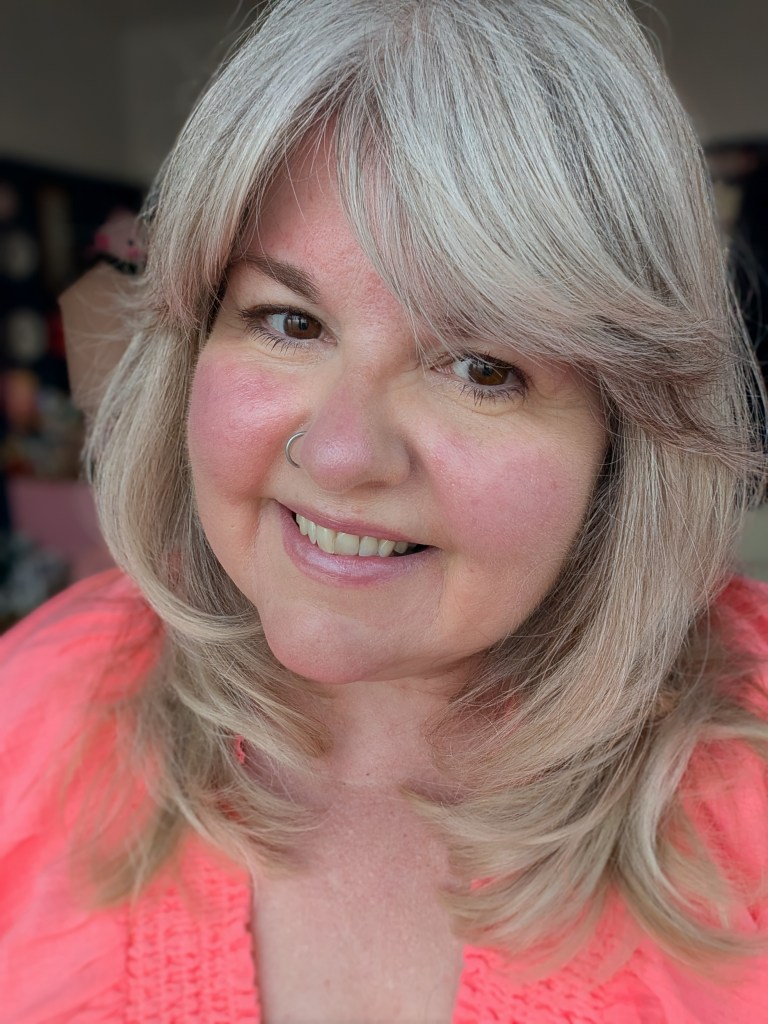
I’m currently dealing with a flare-up, and whenever that happens, I go back to basics. No active ingredients, no experimenting, no chasing the latest trends. Just products I know my skin can tolerate.
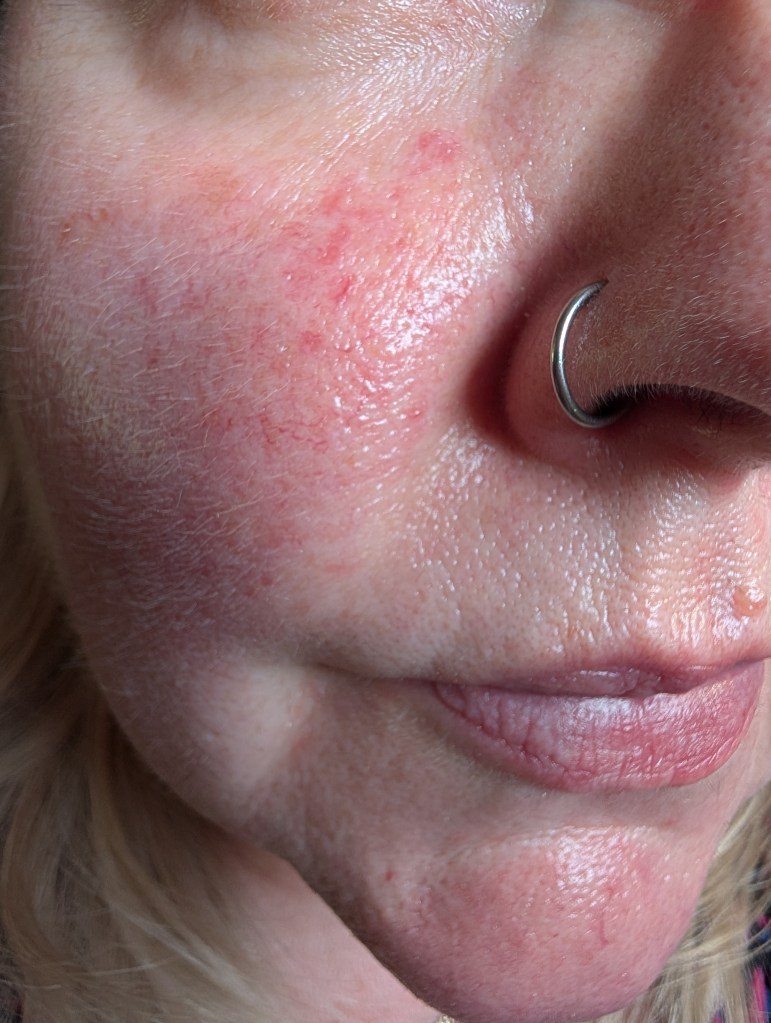
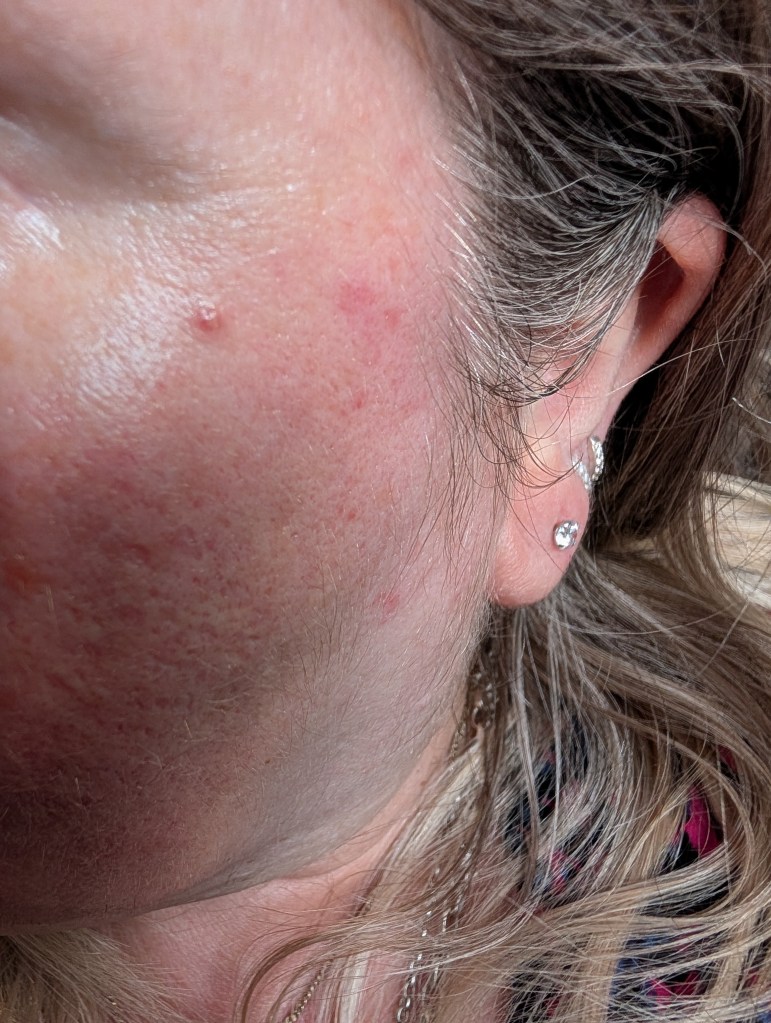
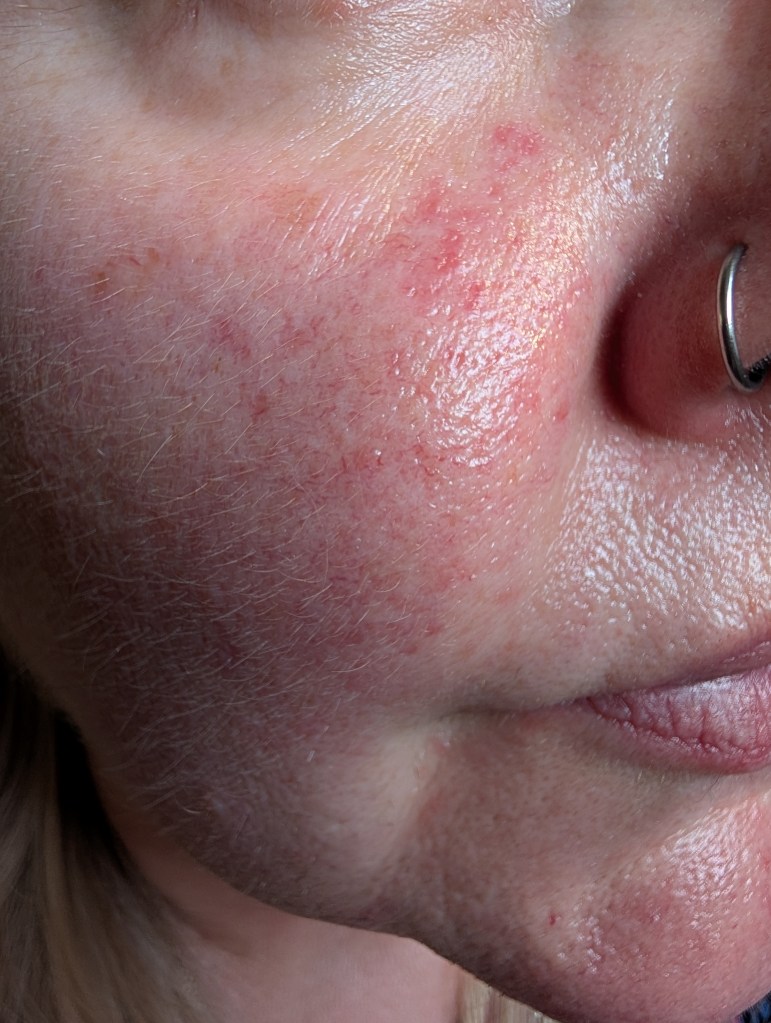
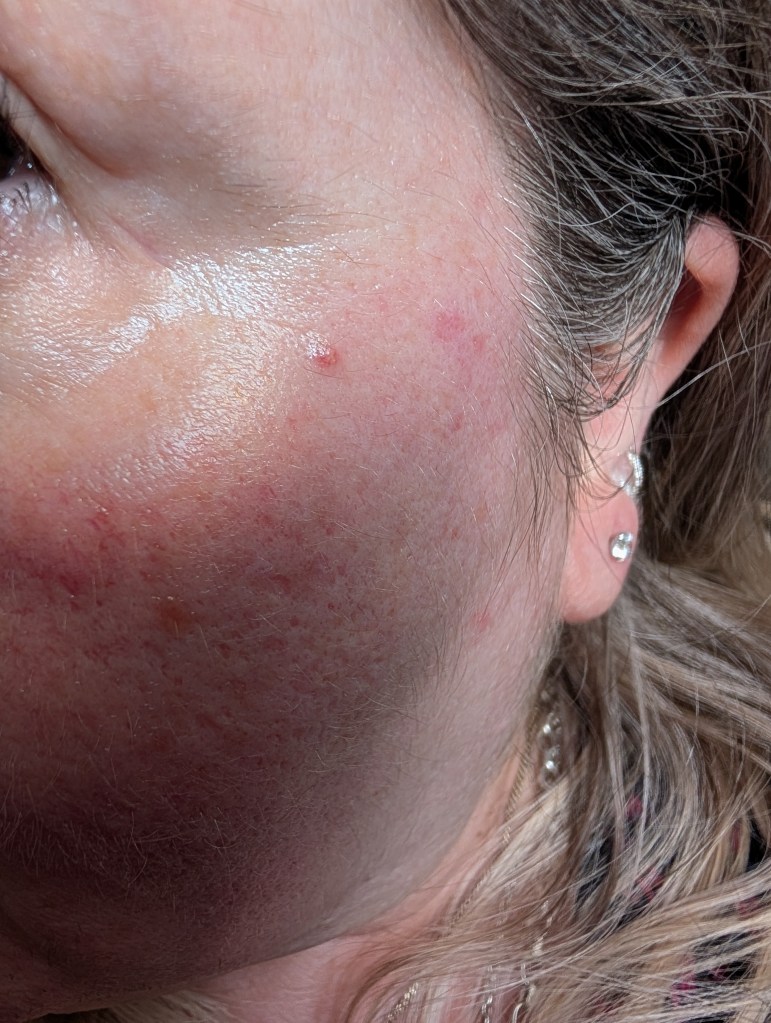
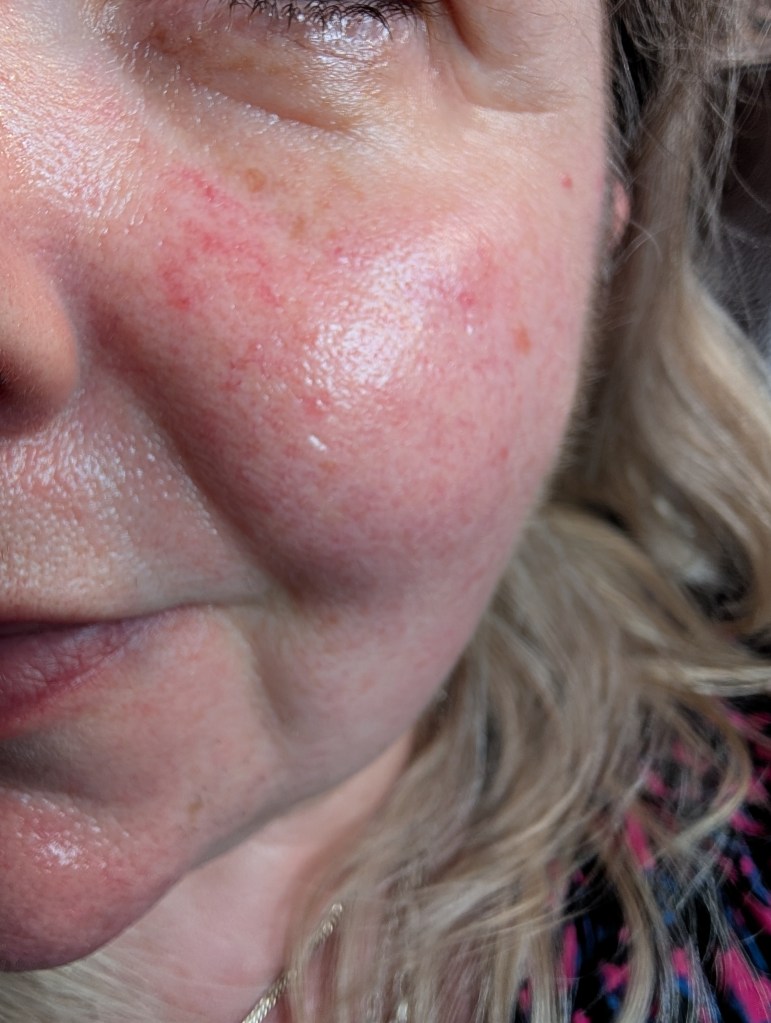
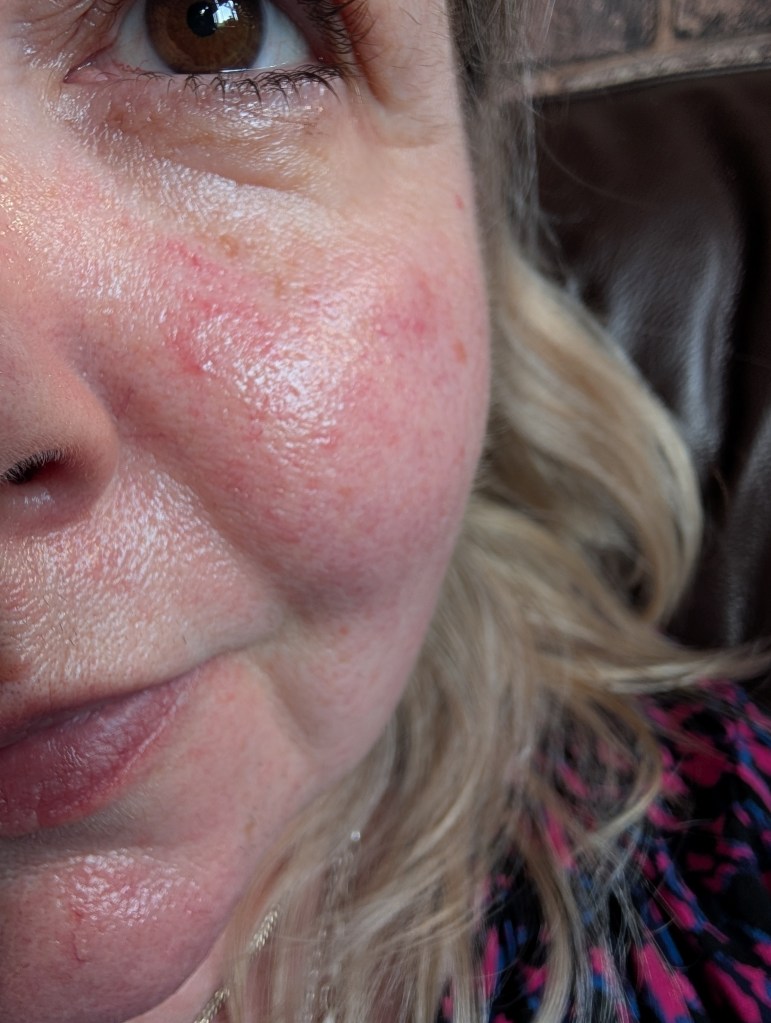
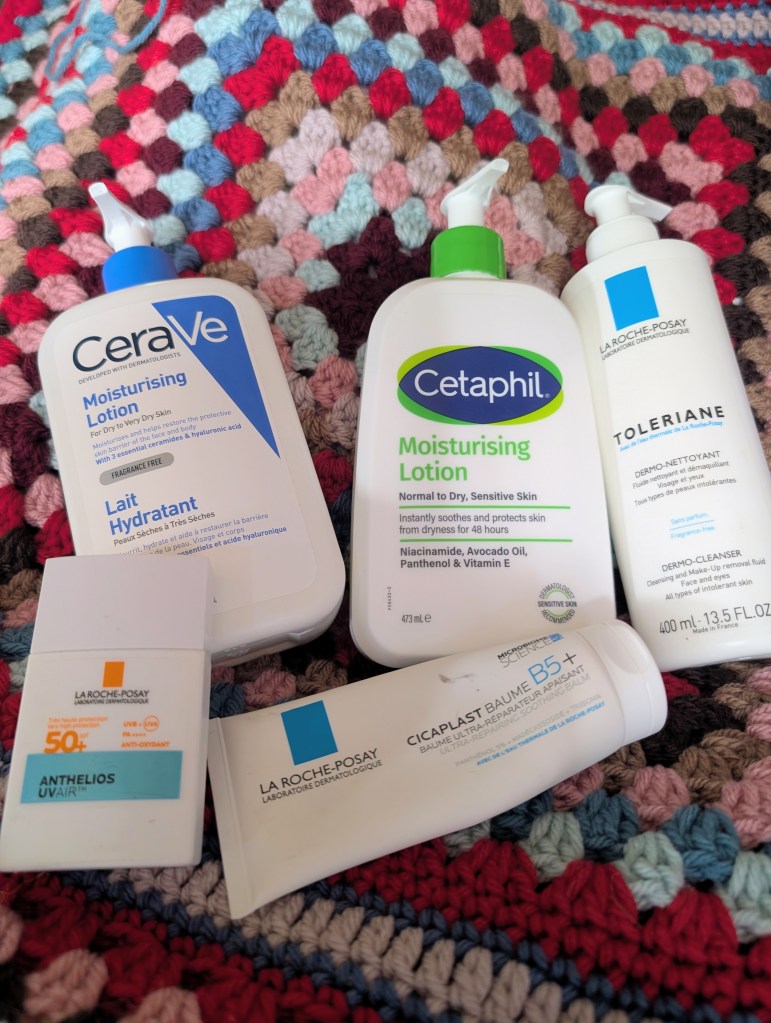
As you can see, my skin is irritated and sore, so at the moment, my routine is wonderfully simple:
Morning
- La Roche-Posay Toleriane Cleanser
- CeraVe Moisturiser
- La Roche-Posay SPF
Evening
- La Roche-Posay Toleriane Cleanser
- CeraVe Moisturiser
- La Roche-Posay Cicaplast Baume
Sometimes, the kindest thing we can do for our skin is to leave it alone.
What is rosacea?
Rosacea is a long-term inflammatory skin condition that most commonly affects the face. It often comes and goes, with periods where the skin is relatively calm followed by flare-ups.
Although it can’t currently be cured, it can usually be managed by understanding your triggers and keeping your skin barrier as healthy as possible.
The different types of rosacea
Rosacea isn’t the same for everyone, and there are several different subtypes.
The 4 Main Types of Rosacea
1. Erythematotelangiectatic Rosacea (Subtype 1)
Symptoms: Persistent facial redness, flushing, and visible, enlarged blood vessels (thread veins).
Sensations: Skin may feel sensitive, warm, stinging, or dry.
2. Papulopustular Rosacea (Subtype 2)
Symptoms: Red, swollen bumps and pus-filled breakouts (pustules). Often mistaken for adult acne, though it lacks blackheads.
3. Phymatous Rosacea (Subtype 3)
Symptoms: Thickening, scarring, and hardening of the skin, resulting in a bumpy, swollen appearance. This most frequently affects the nose, causing it to appear enlarged or bulbous (a condition known as rhinophyma); it is more common in men.
4. Ocular Rosacea (Subtype 4)
Symptoms: Affects the eye area, causing bloodshot or watery eyes, a gritty feeling, sensitivity to light, and eyelid inflammation. Eye symptoms can manifest before or alongside any visible skin redness.
What causes a rosacea flare?
Unfortunately, there isn’t one single trigger. Everyone is different, but common causes include:
- Sun exposure
- Hot weather or extreme cold
- Wind
- Stress and anxiety
- Alcohol, especially red wine
- Spicy foods
- Hot drinks
- Vigorous exercise
- Fragranced or harsh skincare
- Over-exfoliating
- Introducing too many active ingredients at once
For me, a flare is a reminder that my skin barrier is overwhelmed and needs support, not more products.
My skin profile
Age: 54
Skin tone: Very fair (burns easily)
Skin type: Dry/dehydrated
Skin condition: Rosacea (persistent redness and papules/pustules)
Sensitivity: Very sensitive/reactive skin
Skin barrier: Prone to becoming compromised during flares
Pigmentation: Slight pigmentation spots under the eyes
Fine lines & wrinkles: Ageing skin
Aesthetic treatments: None/no injectables, professional chemical peels, dermabrasion or cosmetic skin procedures
Lifestyle: Daily SPF wearer
Skincare preference: Focus on a gentle, barrier-supporting skincare routine
Biggest triggers: sun, stress, heat, alcohol, spicy food
Hormone Info: Taking HRT
Supplements: Take daily supplements to support my general health (not as a treatment for rosacea)
IMPORTANT: My skin profile is simply about transparency, not judgment. We all choose to age in our own way, and there is no right or wrong approach. I share mine because I think it’s helpful to understand that our skin is influenced by so many factors: genetics, hormones, health, lifestyle and skincare. There isn’t one magic product or one-size-fits-all solution.
Some days, my rosacea is barely noticeable. Other days, like now, my cheeks are red, I have inflammatory spots, and my skin feels sensitive to almost everything.
That’s just the reality of living with rosacea.
Why I’ve stripped my routine back
When my skin is flaring, my goal changes completely. I’m no longer trying to brighten, firm, smooth or target pigmentation.
Instead, I’m focusing on three simple things:
- Cleansing gently without stripping my skin.
- Moisturising to support my skin barrier.
- Protecting my skin every single day with sunscreen.
It’s not exciting skincare, but it’s exactly what my skin needs.
If your skin is angry, you don’t need a ten-step routine. You definitely don’t need every trending serum.
Sometimes the best skincare routine is the simplest one, especially if, like me, you have rosacea. Often, I’m sucked into skin care products on social media and their promise of eternal youth. I am only human, skin care is something I have always been passionate about, and I do love trying new things, but then my skin reminds me that I need to go slowly.
Be patient with your skin. Protect your barrier. Wear your SPF every day. And remember that progress with rosacea is often measured in weeks, not days.
If you live with rosacea too, I’d love to know what your biggest trigger is. We all have different experiences, and sharing them might help someone else feel a little less alone.
Love & healing hugs

 Wool Goddess
Leave a comment